Dr. Francis Peabody
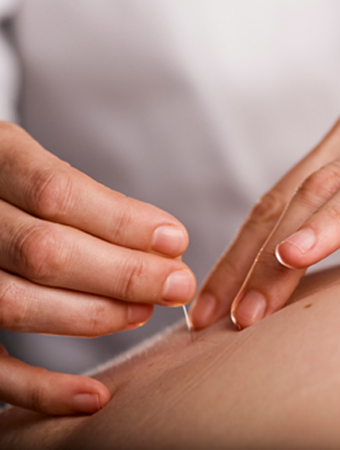
Acupuncture is a 3000+ year old Chinese healthcare system, for billions of people, using very fine needles and other stimuli to access the body’s innate healing mechanisms. Acupuncture is practiced around the world today. It is a natural and holistic treatment protocol, which is recognized by the World Health Organization (WHO).
Acupuncture helps to prevent illness by improving the overall functioning of the body’s immune and organ systems. Acupuncture is used to: prevent recurrence of past illnesses; treat existing illness and injury; and, prevent future illness by improving overall health.
Acupuncture directs, regulates and balances Qi (pronounced “chee”), which is the vital energy that flows through the body. By restoring the balance of Qi, acupuncture treats pain and disease, and also promotes general wellness.
Qi flows through the body in pathways called Meridians. There are twelve regular Meridians (a total of 71 Meridians, in all), which are generally named for major organs. The Meridians are somewhat related to the physical organs, however, they specifically relate to the Chinese “energetic” function of the organs. Meridian pathways connect internal organs and the surface of the body, as well as muscles, bones, joints, etc. Acupuncture points are access portals along the Meridians or pathways.
When Qi flows freely through the Meridians, the body is in harmony and the person is healthy and balanced.
When the flow of Qi is blocked, deficient or excess, the harmony of the body is disrupted and pain or disease results. There is a Chinese saying, “If there is free flow, there is no pain; if there is no free flow, there is pain“.
The goal of acupuncture is to restore the free flow of Qi by stimulating specific points along the Meridians. Thereby, bringing balance and health to the body.
Acupuncture is auto-regulatory, it balances hyperactive or hypoactive organs and systems, restoring optimum health.
Chinese Medicine has been around for thousands of years, and has provided us with a unique and holistic approach to prevent and treat disease. Both Western Medicine and Chinese Medicine ultimately rely on the body’s natural healing ability to maintain health and protect against disease. Both have the same goal of helping a person stay healthy. Western Medicine has excellent modern diagnostic equipment, but tends to use drugs and surgery to primarily treat symptoms. Acupuncture uses gentle needling and herbs to treat both the symptoms (usually pain) and the cause of the disease. An integration of both systems can facilitate a better healing protocol for the patient.
Chinese medicine is over 3,000 years old, some say it is 5,000 years old.
Chinese medicine uses tiny needles to access and activate Qi (pronounced “chee” – most closely translated into Western thought as “vital energy”), which restores the body back to health by resolving energy imbalances.
Acupuncture is a safe, natural, effective healthcare system.
Acupuncture treatments are drug-free so there is no risk of drug interactions or dependencies.
You should always disclose any pre-existing conditions, current medications, and pregnancy.
Acupuncture needles are almost hair-thin and have a solid core. They are sterile and disposable, so there is virtualy no risk of infection. A needle is used only once, then it is disposed.
Acupuncture needles are solid, not hollow like syringe needles used by Western Medical Doctors. Acupuncture needles are hair-thin and very flexible.
Only sterile, disposable needles are used so there is virtually no risk of infection. We use a needle once, then dispose it.
In 1996, the U.S. Food and Drug Administration (FDA) removed the experimental status tag on acupuncture needles. The FDA reclassified acupuncture needles, regulating them as it does medical devices such as surgical scalpels and hypodermic syringes. Acupuncture needles must now be manufactured according to single-use standards of sterility.
People experience the needling sensation differently. Most people do not describe acupuncture needles as painful, although the needle may produce an achy, dull, heavy, warm or tingling sensation. If on occasion there is a sharp or burning pain, the needle can be quickly adjusted to minimize any discomfort felt by the patient. Once the needles are inserted, they may be manipulated to obtain a mild “Qi” sensation. This is how an acupuncturist engages the energy and biochemical responses in your body, in order to restore balance. We take great care to make our patients very comfortable so that they can relax while the needles are in place. The more you can relax during an acupuncture treatment, the better the results. Some people even fall asleep during treatment. Following treatment, it is common to feel a sense of relaxation and calm.
No. Acupuncture works whether or not you believe it will. Acupuncture is used successfully on animals and children. They do not understand or believe in the acupuncture process, yet they get better anyway. Of course a positive attitude helps with any type of therapy, but it is not necessary to believe in acupuncture (or to “feel” it working) for it to work.
Since positive expectations and belief in a particular therapy help to increase therapeutic results, we encourage you to raise any concerns or doubts you may have about acupuncture and Chinese Medicine. We would like to help you to better understand acupuncture and Chinese Medicine, so you may have the most positive healing experience possible. You are invited to contact us today, and we will personally respond to any questions or comments promptly.
Since each patient is unique, the answer to this question is unique for each patient. However, in general, we tell our patients they should start to feel the benefits from acupuncture in 5 to10 treatments. If the problem is acute, sometimes improvement is felt after 1 treatment, and may only need 5 to 10 treatments to resolve. If the problem is chronic and long term, it may take many treatments to resolve.
The treatment cycle depends on the condition being treated. For most conditions, it is therapeutically most effective to be treated 2 or 3 times per week. Once the condition is stabilized, we typically treat patients once a week, until the condition is resolved.
No, nothing works for everyone, but acupuncture does work for most people. If you do not feel any benefit after 5 to 10 treatments, then acupuncture may not work for you.
Wear loose fitting clothes that can be easily rolled up above your elbows and knees.
Some insurance policies do cover acupuncture, it varies from policy to policy.
We accept most insurance policies that include out-of-network acupuncture benefits.
Please call us with your name, insurance company, member ID number, and date of birth. We will verify your insurance coverage.
Acu-Care Health LLC
218 Bridge St, Metuchen, NJ 08840
Dr. Li Jing, L.Ac., Ph.D, MD (China)
Phone Number: 732-790-6303